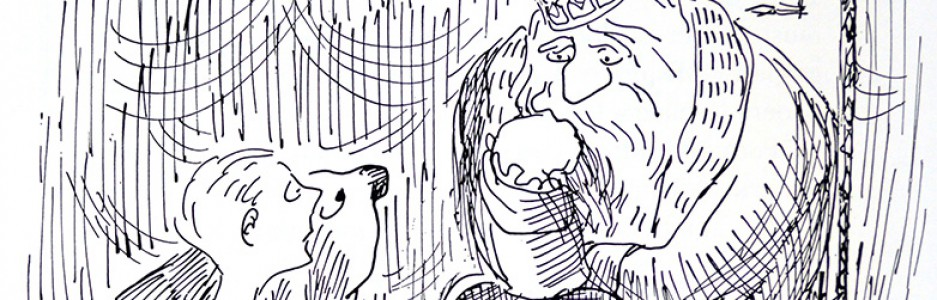

Done With the 101

or Why some media other people find deep feels so shallow

You ever watch a movie or a series that everyone else is gushing about, and you just can’t help but wonder…why? So then you try to find review sites you respect to explain what everyone’s getting out of it, and you find these effusive reviews about how complex and insightful the show is? And you read all those reviews and the examples that keep coming up are ridiculously simple things like, “Did you notice that Verna is an anagram of RAVEN?”

Well, it happens to me a lot. In particular, it has happened with every single thing I have watched from “horror auteur” Mike Flanagan. (Yes, people call him that. No, I do not agree.) And while it is tempting for me to just have a rant about how I think Flanagan is overrated, I wanted to glean something more broadly applicable from this experience. So I am using this opportunity to talk about why reasonable people can have different views about the depth of the same work.

I call it “the 101 effect.”

Continue reading

A Month of Protest Songs (Music Archive #1)

Note – This is the first archive of my “song-a-day month” posts from my personal Facebook page. My first ever effort to do such a list of songs was in December of 2011, largely in response to social media discourse I saw regarding the Occupy movement. Although that particular protest movement turned out to be short-lived, it absolutely laid the groundwork for future organization in the decade that followed. Also, I have to mention that my political views – partially in response to increasing fascism – have only drifted further leftward. My comments for this list feel downright mild to my older eyes.

Preview Comments

As the Occupiers face more and more government interference, as popular support for their movement begins to wane, I thought it was important to have a renewal of purpose. I decided that for the month of december I would do another song-a-day project, but this one will be a month of protest songs. We need to remember why protest matters, not only on this issue but on many important issues. Democracy does not begin and end with voting; it is maintained through the constant exercise of our voice and will.

Continue reading

Ep IX – The Treatmenting

About a year ago, my Star Wars Book Club decided to have some fun and create our own fan treatments of what we would have done with an Episode IX of Star Wars. All of them were different, because we each took widely varied approaches – from “hit similar themes” or even “very slight script doctoring” to “do whatever the hell you want” – but we enjoyed them much more than the often-confusing retcon that was The Rise of Skywalker.

I have not previously shared this treatment outside of the book club, because mine is EXTREMELY inside-baseball, loaded with references to books, series, and games across the Star Wars canon. But given the recent JJ interview in which he admits that “having a plan probably would have been better” (OH REALLY JJ?), I want to show you that it isn’t even necessary to have a trilogy-crossing plan. All it takes is trusting other Star Wars creators and giving their additions the respect they were due.

And if you don’t like my treatment, I bet you would have liked at least one of the others. Or make your own. I bet I’d like it better than JJ’s. Anyway, here we go with the opening crawl:

Continue reading

Deep Thoughts 9

In which I overanalyze my reactions to my first ever full watch-through of Deep Space 9

I have always had a bit of a sideways relationship with Star Trek. I think that Undiscovered Country, not Wrath of Khan, is the best of the O-Trek movies. I don’t mind Generations and Insurrection as much as everyone else seems to. And I tried to get into DS9 when it first aired, but it just did not grab me.

Of course, I found out later that the first two seasons were widely considered the weakest, so I was willing to believe people who called it “the best Trek,” even though I hadn’t seen it. Finally, during quarantine, I settled down and did a marathon watch straight through (with one exception, as noted below) of every episode in all seven seasons.

Those who are familiar with my reactions to media will not be surprised that my take on the show is very different from popular opinion. My favorite parts of the series are not the things most people cite, and I do not share the positive opinions of the aspects most people tout as its highlights.

Continue reading

Characters We Love and the Creators Who Don’t

Several of the fandom arguments I’ve seen recently are more similar than they seem at first, not just because of how they express (though that is also important). They are similar at what I believe to be a root cause level, and it has to do with my favorite subject – subconscious biases. In this case, the subconscious biases belong to the authors/creators.

In this article, I’m going to be arguing about base axioms, which is dangerous ground. I’m not going to say that one is inherently better than another, but simply to state my personal preference and (here’s the sticky part) that the other causes the exact problems we see in audience reactions to certain fandoms.

With all of that dancing around out of the way, let’s get to the discussion.

Continue reading

Art and the Privilege of Community

Have you ever heard someone talking on a podcast about a playgroup or local gaming community and you think, “Wow, that area sure has a lot of great game designers in it?”

That’s no accident. But the causal relationship doesn’t quite go the way we often think it does when we hear these conversations.

It’s not that there is one great game designer who teaches other people around them to design. It’s not even that several great game designers happened by chance to be in the same place at the same time. You see, great game designers are everywhere, but the ones we notice are the ones who have the backing of a social network.

Continue reading

Managing Expectations, or Why I Didn’t Like Your Favorite Con

I’ve been thinking hard about how I want to approach this subject. It’s extremely important, but it’s also a little touchy, because I’m going to be talking about not enjoying things that my friends continue to enjoy. The last thing I want to do is come across as trying to persuade people to dislike something they love. I’ve explained in other contexts in the past that that’s never a useful approach.

Instead, I want to examine how expectations and priorities change how we view something – in this case conventions – and why that’s important for organizers, participants, and attendees in how they communicate about them.

Continue reading

In the Absence of Virtue

As I expected, I caught a fair amount of disagreement with my last post, but I was happy to hear it. I had a few really good conversations where people explained to me the positives of loyalty, and they definitely brought up some things I hadn’t considered. But ultimately they did not change my mind about loyalty being inherently virtuous.

That’s not because (as some people took it) I hate loyalty specifically, but rather that I don’t think any character trait is inherently virtuous. I was picking on loyalty last time mostly because it was on my mind, and it’s one I don’t think we question enough. But I’m happy to question the virtue of every supposedly positive character trait, including my own.

So now I will need to break that down and then talk about how we can behave in the absence of virtue.

Continue reading

Replacing Loyalty

I am skeptical about loyalty. I’m not normally one to inspire it, and when I have given it I have not often received it in turn. It’s important for me to say that because I realize it colors the argument I am about to make:

Loyalty is not an inherently positive character trait.

Continue reading

Criticizing Empire Like It’s The Last Jedi

I don’t normally do this, but this time, I’m going to start with my conclusion. Because I want you to know where this is going before you get into the pointed jokey part. So here’s the main point I want to make:

You are allowed to like or not like any Star Wars movie. But it’s time for you to acknowledge that your preferences are emotional, not rational.

Those of you who hate The Last Jedi (even if you’re not an utter jerk about it) are doing so for emotional reasons. All the rational criticism you like to throw around is what your brain does to legitimize a decision you’ve already made. This is not an insult, it’s just how human brains work. We fool ourselves into believing that we make logical choices, but most often those logical chains are built to justify rather than to decide.

I’m going to show you how this works by criticizing Empire Strikes Back in all the same ways that many people have criticized The Last Jedi.

Continue reading