Video Game Reflections of 2025

This is an unusual topic for me – I’m not usually one for the “end of year retrospective” type of post. But 2025 has been astonishingly rich in great video games. In particular, this year even the “mainstream” has been flooded with games that I’ve liked. You can see this just by contrasting how my playlist overlapped with The Game Awards nominees last year (2 total, and they’re both way down there) to this year (10 total, including 4 of the 6 Game of the Year nominees). And there are several other nominees for this year that I still plan to get around to.

Part of this has to do with the release of the Switch 2, since that’s where I played 3 of the GotY nominees, but it’s also a tribute to the massive strength of indie releases this year. Seriously, the second half of 2025 was just one indie smash after another, and I am still trying to catch up.

Continue reading

Seeing Rockalypse in Movies Again

I tend to be pretty low-key about my work in the tabletop gaming industry. I don’t feel like I did a ton of things that couldn’t be (or haven’t been) done by others. I think I have a few unique ways of approaching things, such as the kind of thorough, interconnected worldbuilding I displayed in Steamscapes and my work on the Urban Settings Guide for the Sentinel Comics RPG (which may or may not see the light of day, depending on what happens to Greater Than Games).

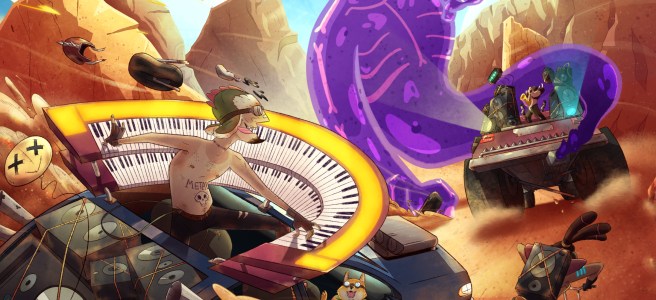
But there’s one game that I think may be my most unique contribution, at least as of this writing. It’s self-contained, nicely concise, and it makes a strong case for my view of game design: that games are best when every element works together to create a unified experience. With such a game, you can feel that ethos when reading it, playing it, running it, or even just talking about it. For me, the best I’ve ever done at achieving that was Rockalypse.

Continue reading

Regional Bands That Should Have Been Bigger

There are many cases of bands being in the right place in the right time. R.E.M. hit it big partially because the B-52s had focused record companies’ attention on the Athens, GA college music scene. CBGB was responsible for launching multiple careers in the 70s and 80s. And these days bands push to get into high-profile festivals like SXSW and Coachella with the hopes that they will be seen and boosted by influencers.

But there are plenty of stories where those things didn’t happen. There are many worthy bands that, for one reason or another, were not as lucky. Whether they were in the wrong place or whether their sound was just not what people were into at the time, these bands had talent, drive, and lots of great songs, but they didn’t necessarily hit it big. I’d like to look at four of my favorite overlooked bands of the 80s and 90s, with the hope that someone else might discover something new for themselves.

Continue reading

“Superhero Fatigue” Isn’t Actually That

Is superhero fatigue killing movies? Don’t the terrible numbers of 2023 show that there’s superhero fatigue? And if so, why does it exist? Is it because there’s too much to watch? Because it’s bad? Because it’s too “woke?” (Not even those scare quotes can convey the sarcasm I type that with.) Because Millennials are too old? Because Gen Z won’t go out to the movies? Most importantly, how can we make money again? WON’T SOMEONE PLEASE THINK OF THE MONEY?

Everyone from Screen Rant to Forbes talks about this trend as if it’s a given, but no one can seem to agree on what it is and why it’s so pervasive. If you read the industry-focused analyses, the clear indicator is the rapidly declining success of the superhero movie as the box office juggernaut it was throughout the 2010s. If you read the fansite analyses, the clear indicator is the rapidly declining reviews both from critics and audiences (and from non-audience review bombers). But both of these are symptoms with no single clear cause, so anyone can project their own assumptions onto them. And that’s what’s happening, because these analyses are part of the actual real problem. They are themselves a symptom that is indicative of a totally different problem: the addiction to canon.

Continue reading