Every once in a while when I’m hanging around my social media feeds, I see someone who I normally think of as educated, open to new ideas, etc., posting another meme or complaint about “modern art.” Sometimes it’s abstract, sometimes an installation piece, sometimes pop art, but inevitably the question becomes “how is this art?” (Sometimes the conversation focuses on “why is this worth so much?” which is a different but related question.)
Because I always try to hit the same points when I’m replying to these discussions, it was kind of inevitable that this would end up a blog post that I can just link to in the future. So here we are – a discussion of modern and contemporary art and why it is indeed art. Yes, even that banana.
Why did art change?
Before we can get into explanations of specific movements and artistic experiences, we need to examine why art moved beyond representationalism. Because that’s where it was stuck for hundreds of years, through numerous variations. American Realism was one of the last big representational movements before the modern era, and even while it was reaching its peak, other movements like Impressionism and Fauvism were heralding new ways of thinking about art.
The timing of this shift is important. The first stirrings occurred in the late 19th century, and the early 20th saw the first explosion of non-representational art. And the obvious reason for this timing is a simple but profound technological advancement: photography.
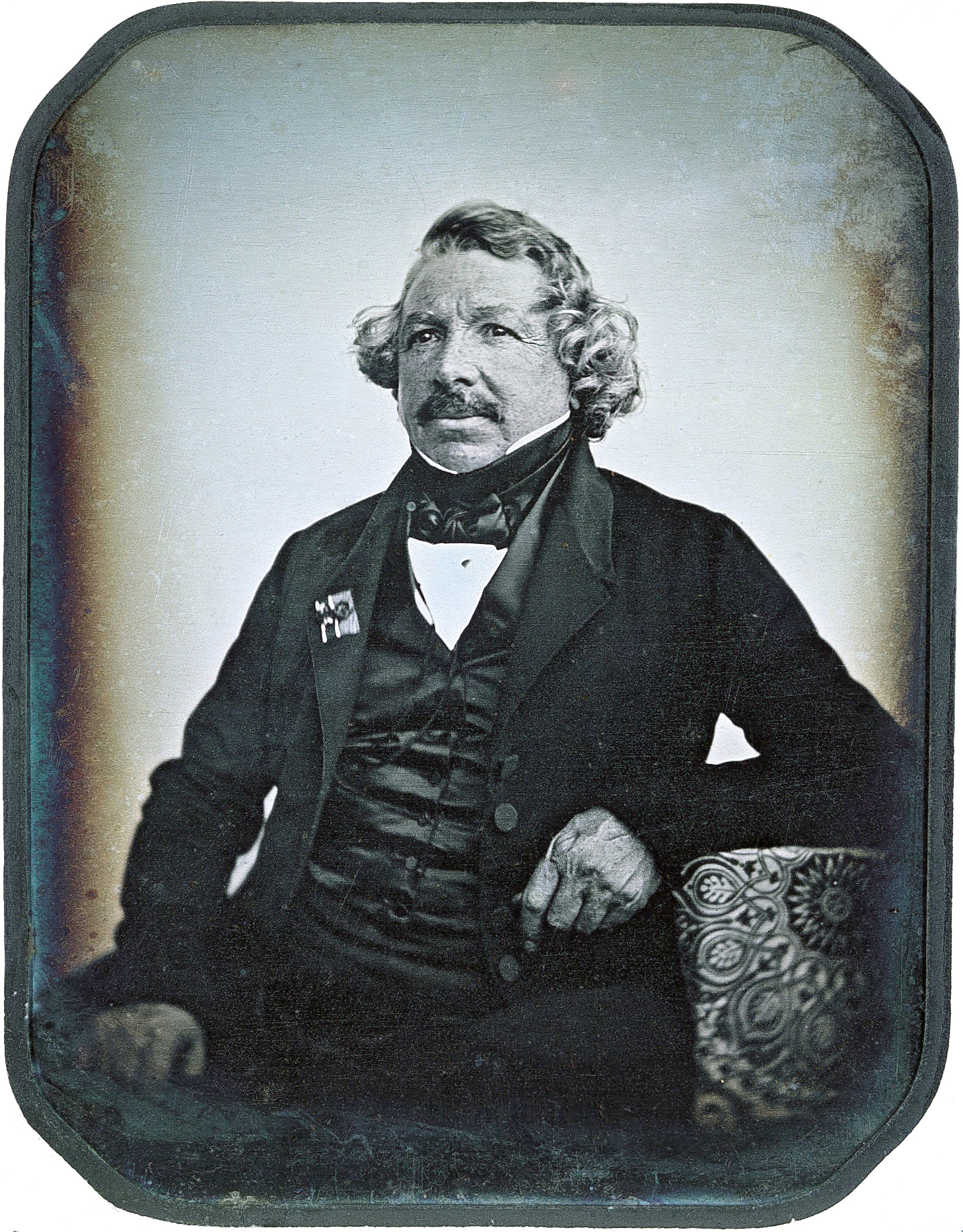
From a purely economic standpoint, the camera very quickly made painted portraits obsolete or at least unappealing. Sitting for an oil portrait took hours or even days, while a photograph could be composed in minutes and taken instantly. Who wouldn’t want to get a more accurate picture that much more quickly? So commercial art began to change, and fine art had to start asking questions of itself – most importantly, what can painting do that photography cannot?
The elements and principles of art
To answer this question, artists went back to the core elements and principles of art. Of the elements (line, shape, form, space, texture, color, and value), only two were not immediately available to photography, and it was pretty clear that color would come someday. Nevertheless, movements like Art Nouveau and Fauvism highlighted color in ways that photography could not, at least at the time. Meanwhile, Impressionism and Cubism emphasized principles like movement and rhythm to distinguish painting as an effective expressive medium.
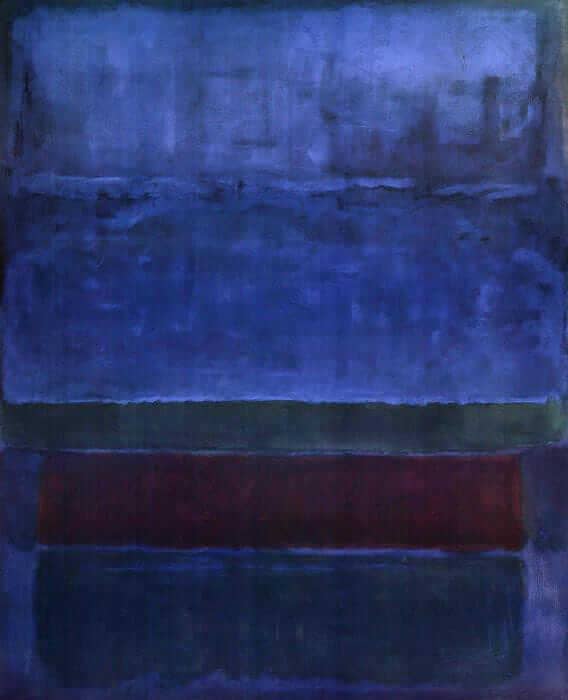
These efforts eventually led to Abstract Expressionism and its many incarnations. So much of the misunderstanding of Abstract Expressionism comes from an effort to view it through a representational lens: “What is this a painting of?” or “What does this mean?” Those questions are not relevant to the abstract artist. Instead, abstraction is an effort to find art, feeling, and even meaning with the core elements and principles of art but without having to show anything specific. Instead of those other questions, try viewing abstract pieces with the questions, “What elements are being highlighted?” and “What principles do they illustrate?” and most importantly “How does this make me feel?”
Art as communication
One of the most important features of art (or any artistic endeavor) is its ability to create a dialogue between the art and the viewer. The art initiates a response in the thoughts and emotions of the audience, and the audience makes judgments about the art through this response. As with Abstract art, some modern art bypasses the idea of representation and moves directly to the dialogue. The Dada movement was one of the first big examples of this kind of work. Duchamp’s “Fountain” is important because of the way it ignites responses from the audience.
But this goes deeper than just “look, I signed a urinal!” Think about how Duchamp prepared the piece – he set it sideways, signed it with an amusing, fictional name, and gave it a wry, ironic title. His actions convey an intentionality beyond just the provocation implied by passing off a dirty urinal as art, and this is what invites the dialogue.

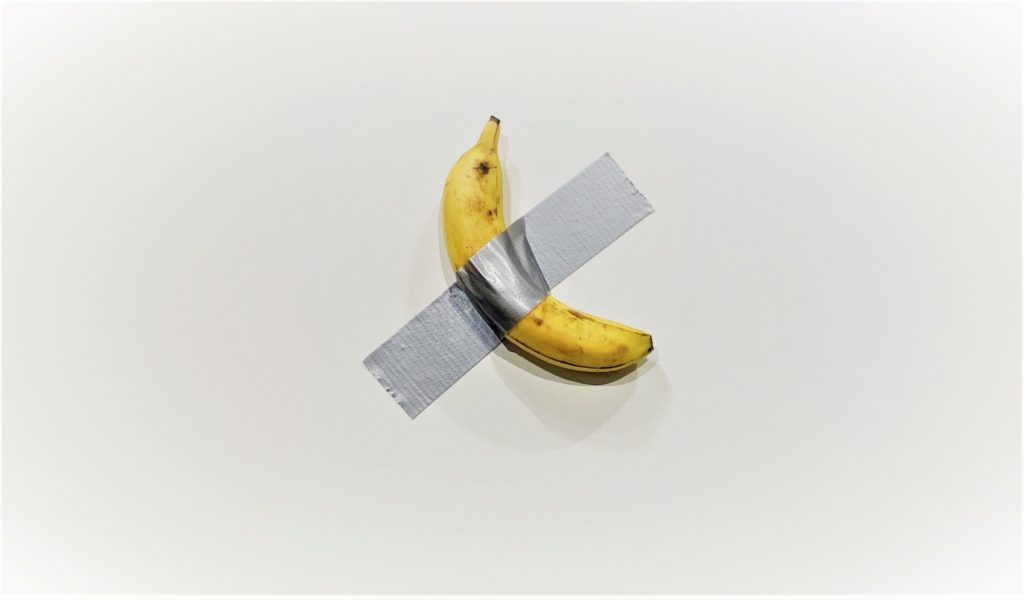
And that brings me to Maurizio Cattelan. Before we talk about the banana, let’s talk about another of his works: “America.” This was a working gold toilet installed in a bathroom of the Guggenheim Museum. Think about the intersection of object, title, location, and audience and how each of those impacts the conversation that it creates. Also, this was a piece that needed to be “viewed” privately and individually, which changes the dialogue further. Cattelan is a true modern Dadaist, and that’s why he was the perfect artist to create “Comedian.”
Did you know that’s what the banana was called? Because if you only ever heard that “somebody duct-taped a banana to a wall and called it art,” you were done a disservice. He didn’t call it “art,” he called it “Comedian,” and frankly that’s brilliant. The title gives the piece multiple layers of meaning, creating a dialogue far beyond the mere absurdity of a banana duct-taped to a museum wall. I will defend the power of “Comedian” as a work of art as often as I need to.
Art as consumption
Art has long been associated with money. For hundreds and thousands of years, art was most commonly paid for by civic or religious institutions. There were many crafted objects that had practical use in the home, but most of the ones we know of as artistic pieces were made for and collected by the wealthy or (once again) for civic or religious use. The artistic explosion of the European Renaissance was motivated largely by wealthy patrons, and those patrons made much of their money trading along the Silk Road. This flow of mercantilism and the subsequent artistic looting of the Americas, Africa, and Southern Asia throughout the colonial and imperial periods essentially built the modern Western practices of art commerce.
When we read contemporary articles outlining the problems of how art is valued and sold, what we must remember is that this is not a new phenomenon. It is a natural progression of an industry that has been built for hundreds of years on theft and exploitation. From the gold raids of the Conquistadors to the violent appropriation of Jewish-owned paintings during the Holocaust, the trade of fine art is steeped in blood.
It is with that backdrop that I want to examine Pop Art. Here we have a movement in which artists have quite directly seized the means of their own success. Andy Warhol, Keith Haring, Jeff Koons – these artists all came from working-class (and often immigrant) backgrounds, and they approached art differently because of it. They understood popular appeal intrinsically because they lived in it. Koons grew up selling candy and gift wrap door-to-door, Warhol suffered from early childhood disease and the loss of his father, and Haring left home to be a Deadhead and peacenik. (As a side note, the pop artist some people think of as the biggest thief – Roy Lichtenstein – grew up in a wealthier upper-middle class family. I’m not going to get into the Lichtenstein debate here, but simply observe that perhaps he was a little more out of touch than others.)

Each of these important pop artists built their careers themselves through a variety of pathways. None of them had individual wealthy patrons propping them up. So regardless of whether you think $91 million is a ridiculous amount for a stainless steel sculpture of an inflatable bunny, that price only came about because Jeff Koons worked hard until he found a way into the 80s zeitgeist that had significant staying power (unlike, for instance, Patrick Nagel).
How we talk about art
I am very much a believer in additive definitions. Rather than trying to limit and gatekeep that which we call “art,” I would rather discover new forms, subjects, and styles and ask what their inclusion can say about art and about humanity. When we include the abstract, we can examine how much we can take away and still have art. When we include the absurd, we can examine how art impacts each person differently and why. When we include the popular, we can examine how art connects to society at large. All of those are valuable discussions that would be lost if we were to remove such pieces from the conversation.
With all that said, you are welcome to NOT LIKE any piece of art you want. You just don’t get to tell anyone it ISN’T ART. And if you want to get into a more in-depth discussion about how we define art, I’m happy to do that, but I do not and will not ever respect blanket statements disregarding either individual pieces or entire movements out of hand. I hope that you can see how much more interesting the world might be if you open your mind just a bit.
 Eric the Unabridged